
How to Stop Saying Um and Filler Words When Speaking
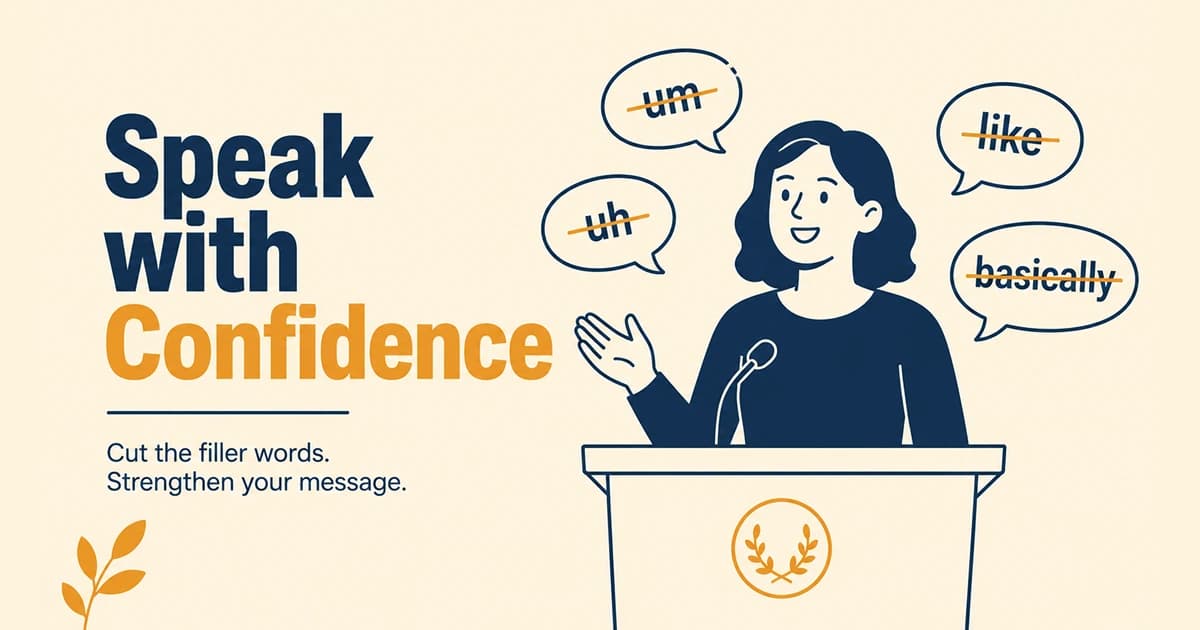
You know exactly what you want to say. But when you start speaking, the ums and uhs show up uninvited. Before you know it, you have said like four times in one sentence and basically twice in the same paragraph.
Filler words are one of the most common speaking habits people want to fix. And for good reason. They can make you sound unsure of yourself, even when you are not. In a job interview, a pitch meeting, or a presentation, the way you speak shapes how people perceive your ideas.
The good news is that filler words are a habit, not a personality trait. Habits can be changed with the right awareness and practice. Here is exactly how to do it.
The short version
Filler words are a habit driven by lack of awareness, speaking too fast, or not knowing your material well enough. The fix is not willpower. It is practice with feedback.
Record yourself. Listen back. Replace the next filler with a pause. Repeat that process consistently and a deliberate pause can gradually become more natural than an automatic filler.
You will not eliminate every filler word forever. But you will get to a place where they no longer undermine what you are saying. That is the goal and it is very reachable.
What are filler words and why do we use them?
Filler words include vocal fillers or filled pauses that appear while we plan what to say next. Common examples in English include um, uh, like, you know, basically, so, right, and actually.
They serve a purpose in casual conversation. They signal to the listener that you are not done speaking yet. They buy you thinking time. In everyday chat, a few fillers are completely normal and harmless.
The problem is when they become automatic. When you say "um" out of habit rather than as a genuine pause, it starts to undermine your credibility. Listeners begin to notice the filler more than the content.
Why filler words are hard to stop
Most people do not hear their own filler words. When you are speaking, your brain is focused on what to say next, not on monitoring what just came out. This is why you can give a presentation full of ums and not realize it until you watch the recording back.
Awareness is the first step. You cannot fix a habit you cannot see. The methods below all start from the same foundation: you need to be able to hear yourself.
6 ways to reduce filler words when speaking
1. Record yourself and listen back
This is one of the most useful things you can do. Record a practice run of whatever you are preparing for, a pitch, a presentation, an introduction, and then listen to it. Most people are surprised by how many fillers they use when they hear themselves on playback. That surprise is useful. It builds awareness faster than anything else.
2. Embrace the pause
The most powerful replacement for a filler word is silence. Instead of saying "um" while you think, just stop and take a breath. It feels awkward to you in the moment. To your listener, it sounds like confidence. A speaker who pauses deliberately is a speaker who knows what they are doing. Practice inserting short silences in place of your most common filler and you will notice the difference quickly.
3. Slow down your speaking pace
Many filler words appear because we are speaking faster than we can think. When your mouth outruns your brain, the filler fills the gap. Slowing down gives your brain time to find the right words before you need to say them. Use our guide to average speaking rate and words per minute to measure your pace and find a comfortable starting range. The right pace still depends on your audience, material, and speaking style.
4. Know your material before you speak
Filler words often show up more when speakers are not confident in their content. When you know exactly what you want to say and in what order, you need fewer verbal placeholders. This does not mean memorizing a script word for word. It means knowing your key points well enough that you do not need to search for them mid-sentence.
Practicing out loud, not just reading your notes in your head, is what builds this kind of familiarity. Silent reading does not prepare your mouth for speaking. Speaking out loud does.
5. Identify your specific filler words
Not everyone uses the same fillers. Some people say "um" constantly. Others say "like" or "basically" or "so". When you know which specific words are yours, you can train yourself to catch them before they come out. Ask a friend to count your filler words during a practice conversation. Or use an app that detects them automatically. Once you know your pattern, you can interrupt it.
6. Practice consistently in short sessions
Reducing filler words is a skill like any other skill. It improves with repetition. Short, regular practice sessions make it easier to notice your patterns and work on one change at a time. They also give you more opportunities to rehearse a deliberate pause instead of relying on a filler at the last moment.
Try this 60-second filler-word drill
- Choose a familiar topic and speak about it for 60 seconds.
- Record yourself without restarting when you use a filler.
- Listen back and count each um, uh, like, so, or you know.
- Repeat once, replacing each filler you notice with a short pause.
With PitchBuddy's AI speaking feedback, you can automatically detect your filler words, see exactly where they appeared, and compare each practice attempt.
How long does it take to stop using filler words?
There is no universal timeline. How quickly you improve depends on how often you practice, how frequently you use fillers now, and whether you review your speech closely enough to notice your patterns.
The key word is consistent. Practicing once before an important meeting is unlikely to change a habit that has been building for years. Regular short sessions give you repeated chances to notice, pause, and try again.
What about fillers in casual conversation?
You do not need to eliminate filler words from everyday speech. A conversation with a friend is not a presentation. Some fillers in casual talk are natural and even help conversation flow.
The goal is to have control over when they appear. You want fillers to be a choice, not a reflex. When the stakes are low, let them be. When the stakes are high, you want to be able to switch into a cleaner, clearer speaking mode. That is what practice builds.